
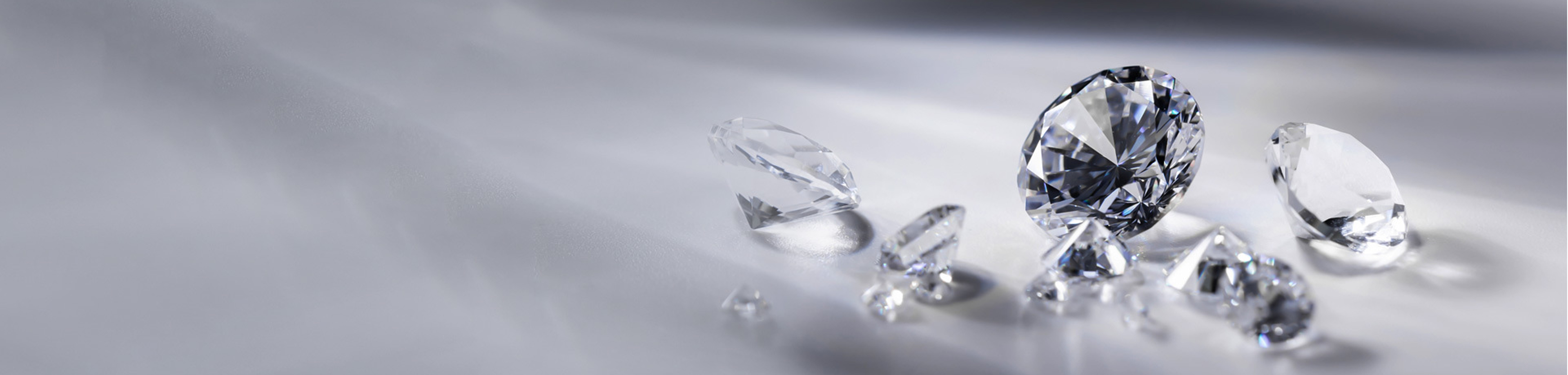
Cultured diamonds refer to diamonds that are artificially generated and manufactured by simulating the crystallization characteristics of natural diamonds, and they are virtually indistinguishable from natural diamonds in terms of properties. In recent years, international jewelry giants such as De Beers, Swarovski, and Pandora have successively launched a series of cultured diamond products, and fashion brands like LightMark in China have also followed suit. Overall, the industry is experiencing rapid growth.
The upstream and downstream segments of the lab-grown diamond industry chain have the highest profit margins, approximately around 60%, while the midstream processing segment only accounts for 10%. The upstream raw stones are mainly grown through HPHT and CVD methods. In 2020, the global production capacity of lab-grown diamonds was approximately 6-7 million carats, with Chinese manufacturers accounting for about 50% of the total capacity and monopolizing almost all HPHT production capacity. These Chinese companies mainly include Power Diamond, Huanghe Whirlwind, Zhongnan Diamond, and Yujiang Diamond. China has a strong voice in the upstream segment of the industry chain.
Cultured diamonds have a significant price advantage over natural diamonds. Currently, their retail prices can reach about 35% of natural diamonds, greatly lowering the threshold for diamond purchases. Liu Ren, co-founder of Light Mark, a domestic cultured diamond brand, said, "Light Mark's 1-carat D-color VS-clarity product is of very good quality among diamond products. Its price in physical stores is now less than 30,000 yuan, which makes it very easy for young people to achieve carat freedom.". ”
Compared to the severe air pollution and destruction of the earth's surface that occur during diamond mining, laboratory-grown diamonds are much more environmentally friendly. Mining diamonds emits harmful carbon emissions of 57,000 grams per carat, while lab-grown diamonds release only 0.028 grams per carat. Furthermore, obtaining one carat of natural diamonds requires the destruction of up to 1,750 tons of soil, which is irreparable and cannot be cultivated for a long time. In contrast, lab-grown diamonds cause zero environmental damage, aligning more closely with the concept of sustainable development.
In December 2020, the National Gemstone Quality Supervision and Inspection Center released a new version of the standard, specifying the Chinese name as "synthetic diamond" or "laboratory-grown diamond", and abolished grading, replacing it with quality evaluation.
In July 2018, the Federal Trade Commission (FTC) decided to remove the term "natural" from its 2018 jewelry guidelines regarding the definition of diamonds, and no longer recommended using the term "synthetic" to describe lab-grown diamonds. This signifies an elevation in the status of lab-grown diamonds and further diminishes their distinction from natural diamonds.
From the perspective of industry development stage, the growth opportunity for the lab-grown diamond industry has emerged, and the tipping point is approaching. From the perspective of industry space, lab-grown diamonds are not just a partial replacement for natural diamonds. De Beers' current positioning of lab-grown diamonds as a light luxury product is expected to stimulate a new jewelry consumption market, with a potential market space in the hundreds of billions. From the perspective of competition landscape, China is a global producer of lab-grown diamonds and a major consumer market for them. Companies such as Jiarui Fu Diamonds, Hongtai Diamonds, Power Diamonds, Huanghe Whirlwind, and Zhongbing Hongjian account for the majority of rough diamond market share. We believe that the development prospects of lab-grown diamonds are immense!