
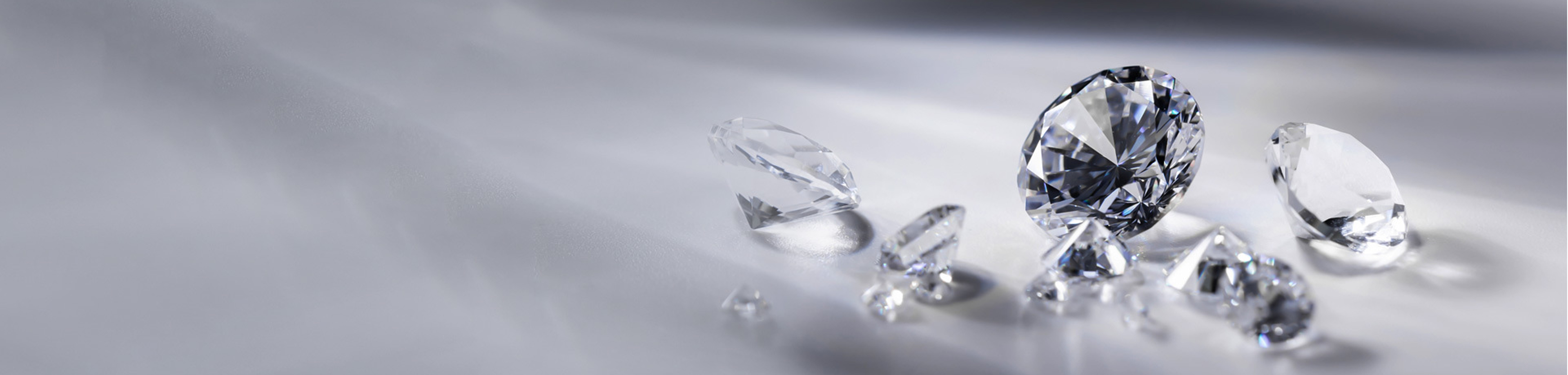
Actually, diamond, which we refer to as a diamond, is a mineral composed of pure carbon.
When it comes to minerals, diamond is definitely a must-mention. It is one of the hardest stones in the mineral kingdom, suitable for fine grinding, cutting high-hardness materials, and drill bits, among others. Diamonds are also used in components of many precision instruments. Diamonds come in a wide range of colors, from colorless and white to black. Some are transparent, while others are translucent or opaque. Most diamonds have a yellowish hue. With a high refractive index and strong dispersion properties, diamonds reflect a rainbow of colors. When exposed to X-ray radiation, diamonds emit a blue-green fluorescence. Diamonds are formed within kimberlite pipes, which are their primary rocks of origin. Other diamonds are transported downstream by rivers, glaciers, and other natural processes. Diamonds are granular in shape. If heated to 1,000 degrees Celsius, diamonds will gradually transform into graphite.
Around the 1950s, the United States produced synthetic diamonds using graphite as the raw material under high temperature and high pressure. Synthetic diamonds have been widely used in production and daily life. However, it is still difficult to produce large diamonds with current technology.
People refer to the processed ones as diamonds and the unprocessed ones as diamonds. In China, diamonds first appeared in Buddhist scriptures. Diamonds are among the hardest substances in nature, with colors ranging from colorless, special colors, blue, purple, golden yellow, and so on. These colored diamonds are very rare and stand out among diamonds. India is a historically renowned producer of diamonds, but the output is relatively scarce. The production of high-quality diamonds accounts for about one billionth of the mining output, making them extremely expensive. After processing, diamonds generally come in shapes such as round, rectangular, square, oval, heart-shaped, pear-shaped, and marquise-cut.
Crystal structure: The unit cell adopts a face-centered cubic structure, with each unit cell containing two groups of eight C atoms.
Diamonds commonly come in colors such as yellow, brown, blue, green, and pink, with colorless ones being particularly excellent. In the world, ten extra-large gem-quality diamonds weighing over 620 carats have been discovered, among which the largest is the Cullinan, weighing 3,106 carats and measuring 5×6.5×10 centimeters. It was found in the Premier Mine in South Africa in 1905.
In the 1987 data, China's diamond mining areas include: Jinan metallogenic province, western Shandong, northern Jiangsu, northern Anhui metallogenic province, Shanxi, Henan, and Hebei metallogenic province. Kimberlites have been discovered in various places such as the Taihang Mountains, Mount Song, and Mount Wutai. In the Hunan-Guizhou-Hubei-Sichuan metallogenic province, four diamond placer deposits of industrial value have been discovered in the Yuanshui River basin of Hunan Province.