
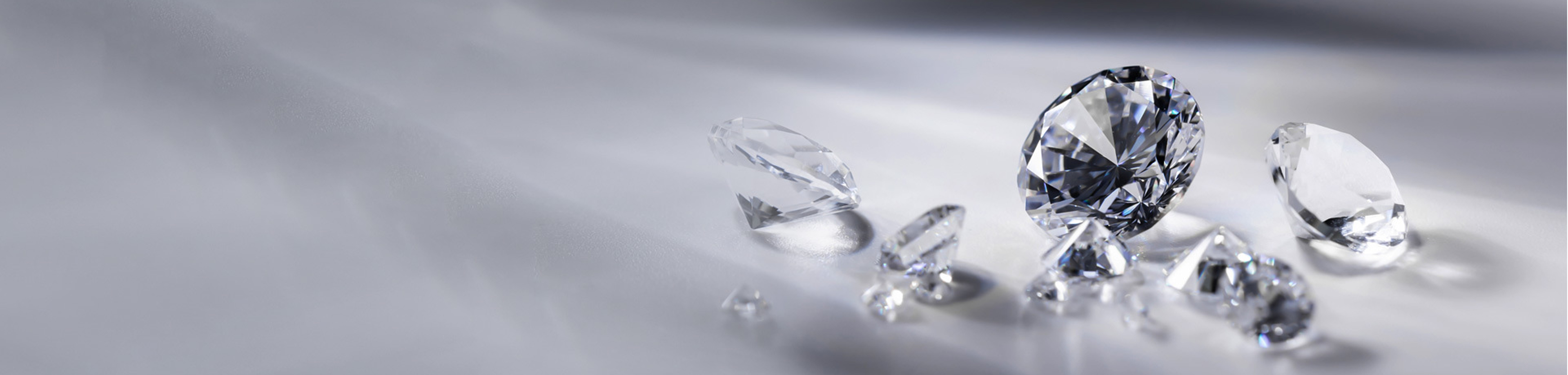
Diamond, commonly known as "diamond", is the precursor of the diamond we often refer to. It is a mineral composed of carbon, a particulate matter composed of a single element in nature, and a carbon allotrope (diamond, graphene, fullerene, carbon nanotubes, lonsdaleite, etc.). Diamond is currently the hardest substance found in numerous natural occurrences on Earth. Moreover, diamond is not only produced on Earth; it has also been found in the form of natural diamond in meteorites that fall from the sky. Diamond has a wide range of applications, such as in crafts and cutting tools in industry. Graphite can be used to form synthetic diamond under high temperature and pressure, and it is also a precious gemstone. China also possesses the technology to manufacture diamond. It should be noted that graphite and diamond have completely different physical properties. Diamonds come in various colors, ranging from colorless to black, with colorless ones being particularly excellent. They can be transparent, translucent, or opaque, and can also be nanodiamonds. Many diamonds have a yellow tint, mainly due to impurities contained within the diamond. Diamond has a very high refractive index and strong dispersion properties, which is why it reflects colorful flashes. Under X-ray irradiation, diamond emits blue-green fluorescence. Primary diamond deposits are only found in kimberlite pipes or a few lamprophyre deposits. Kimberlite and other rocks are their parent rocks, while diamonds from other places are transported by rivers, glaciers, etc. Diamonds are generally granular. If heated to 1000°C, diamond will slowly turn into graphite and carbon dioxide gas.
Carbonado is a natural polycrystalline diamond found in alluvial deposits in the Central African Republic and Brazil. Its natural color is black or dark gray, and it has more pores than other diamonds. Finished black diamonds have become one of the more popular decorations among the upper class. Among various colored diamonds, black diamonds are particularly precious due to their scarcity. Compared to black diamonds with more gemological significance, carbonado generally refers specifically to naturally occurring black diamond rough. Individuals of gem-quality are cut into black diamonds.
How Black Gold is Formed: Black diamonds, also known as carbonado diamonds, have a black porous structure and a hardness comparable to other diamonds, and are only found in Brazil and the Central African Republic. Black diamonds mostly exist in the form of irregular or round fragments, so they are more commonly used in industrial applications. With the development of the times, black diamonds have also been used in the jewelry industry, and due to their scarcity, they are also quite expensive. According to analysis, in January 2012, scientists confirmed that black diamonds are formed from meteoroids that survived supernova explosions. These meteoroids, which may have a diameter of up to 1 mile (approximately 1.6 kilometers), are crushed into fragments after passing through the Earth's atmosphere and fall into South America and Africa, where they are buried underground. Black diamonds, also known as carbonado diamonds, have a black porous structure and a hardness comparable to other diamonds, and are only found in Brazil and the Central African Republic. Hagelti, an astrophysicist at Florida State University, said that the formation process of ordinary diamonds is actually the same from Australia to Siberia, and from China to India. However, the composition of these diamonds and black diamonds is different. Previous research results have also been supported by new data, indicating that black diamonds are actually the products of supernova explosions. When they fall on Earth, they have a diameter of about one kilometer or even longer, resembling a small planet.
When any two different minerals are scratched against each other, one of them will inevitably be damaged. There is a mineral that can scratch all other minerals, but no other mineral can scratch it. This is diamond.
It was not until the latter half of the 18th century that scientists figured out the "material" that constitutes diamond. As mentioned earlier, records about diamond appeared in literature as early as the 1st century AD. However, for more than 1,600 years thereafter, people remained unaware of the composition of diamond.
It was not until the 1770s to 1790s in the 18th century that French chemist Antoine Lavoisier (1743~1794) and others conducted experiments on burning diamond in oxygen, and found that what was obtained was carbon dioxide gas, a substance composed of oxygen and carbon. The carbon here came from diamond. Finally, these experiments proved that the material that makes up diamond is carbon.
Knowing that the composition of diamond is carbon still cannot explain why diamond has such a high hardness. For example, the material used to make pencil lead is graphite, which is also composed of carbon, yet graphite is a mineral softer than a human fingernail. Why are these two minerals, diamond and graphite, so different?
This question was answered in 1913 by the British physicist William Bragg and his son. The Braggs observed diamond using X-rays to study the arrangement of atoms within the diamond crystal. They discovered that within the diamond crystal, each carbon atom is tightly bound to four neighboring carbon atoms, forming a dense three-dimensional structure. This is a special structure not seen in other minerals. Moreover, this dense structure gives diamond a density of about 3.5 grams per cubic centimeter, which is about 1.5 times that of graphite. It is this dense structure that gives diamond its high hardness. In other words, diamond is a mineral formed by the compression of carbon atoms.